This is another blog post based on a question I've seen in a number of interviews:
What would you say to help new writers?
Well, apart from, Go, go now while you still have a chance! It's too late for me, but you've got your whole life ahead of you!
Apart from that, which I would obviously never, ever say to a new writer. Not one who didn't know my peculiar sense of humour, anyway.
I find myself usually offering something that feels trite in answer to this question: Keep editing, make your friends read over your work, make your family read over your work, make kind strangers on the side of the road read your work, then revise what you've written with that feedback in mind.
Keep trying. Remember that every 'no' brings you closer towards a 'yes'. Success is built on the mountain of 'no'. Embrace it. Hug it like a lover.
And stuff like that.
In this personal blog, though, I have a bit more room to make an answer to this question. I've been there through most of it myself. I've been in the writing classes, the workshop groups. (I had a particular woman who was the bane of my writerly existence from aged 18 to 24, constantly telling drawing thick red lines through my writing. I'm now lucky enough to have stayed in contact with her for long enough that my writing has progressed to the point there are fewer thick red lines.) I've agonised over what words to use in the synopses, and polished the first page within an inch of its life in vain hopes that it will capture a publisher's interest. I've been rejected and then picked up by another house for the same piece of work so I know it can't have been that bad, it just wasn't the right fit for the first place(s) I submitted to. I've been published and then discouraged when I found my work wasn't done, lost interest in the books I was meant to be promoting, and let things slide.
But it's like they say on the popular campaign for teenage LGBT kids: It gets better.
Of course it does, otherwise we, as writers, would throw in the towels and refuse to get up in the mornings.
I've also decided to make use of other peoples' words to further aid this advice for writers segment. The links below are, without exception, written by people who have shown thought and wit over just some of the issues writers face.
I found them useful and I thought you might too.
The links:
On Writing.
So, it's hard to have much to edit or submit without an actual piece of writing. That's why we're going to start with Rachel Aaron's blog post on how she got from writing 2k words a day to writing 10k.
How I Went From Writing 2,000 Words a Day to 10,000 Words a Day.
I'm a writer who has commonly been able to write large amounts in a single sitting, and been surrounded by people and blog posts that have instructed that the way to go is the steady 1,000 words every day. Look them up on Google, they're out there. They're just weren't really helpful to me. So, if you're like me, I strongly encourage you to click on this link. Rachel is amazing and witty and her 'triangle of writing metrics' is, in my humble opinion, unparalleled.
On Editing.
Obviously, it's difficult to edit your own work. You're a writer, not an editor. Unfortunately, before you can become an author, you do need to learn a little bit about the craft of editing.
Why Editing on Paper Beats Editing on Screen.
Christopher Ruz puts together a run down in this post on what goes into a round of edits for him. Obviously, this isn't a definitive how-to on editing for everyone, but it does give you an example of what can go into an editing process and it's also a good place to start. I've also found the act of reading your manuscript aloud to hear how it runs is helpful. Ultimately, you'll find an editing method that works for you.
On Synopses.
You've got the writing, you've done the editing, but now it's time to make something of it. More to the point, it's time to make somebody else sit up and take notice of it. For that, you need to condense your 50k, 80k, 100k novel into a one page document.
My Method for Writing a Synopsis.
Stacy Nash gives you the run down on how she does synopses in this concise and useful post.
On Rejection Letters.
So, you've written the novel, edited it, submitted it for publication complete with a synopsis and...
It still got rejected.
Why Good Stories Get Rejected.
Not to worry. You are an author now. Come on, you can say it. Your first rejection letter is a rite of passage. Your tenth rejection letter is a rite of passage. Sure, there are some authors who get accepted in the first house they submit to, but it's the exception rather than the rule. In this blog post, E. M. Lynley goes into some detail on what it is that causes good stories to get rejected.
On Online Promotion.
Now you're published. If you got into one of the big houses, good for you! They'll actually do a lot of the marketing for you, you'll have a book launch, it'll be terrific. But maybe you got picked up by an indie publisher, or got sick of all the rejection letters and decided to go into self publishing.
The Complete and Unabridged Guide to Goodreads for Authors Set Up Customization and Widgets, Lots of Widgets.
What they don't tell you is that the writer's job doesn't stop at getting the novel published. Even if you're published with one of the bigger companies, you'll still be expected to have an online face. Twitter and Facebook are great, but one of the best online promotional tools going around right now is Goodreads. It changed my life. It'll waste a lot of your daytime hours, and it'll be worth it. Best of all, this is one of the most fun sites around right now, and John Corwin's post is one of the best walk throughs I've seen of it. I had a hoot while reading it.
**
I've also been featured on Allan Krummenaker's blog, writing further insights on plot and character creation.
http://allankrummenacker.blogspot.com/2013/02/i-have-guest-for-you-all-meet-nicole.html

Showing posts with label christopher ruz. Show all posts
Showing posts with label christopher ruz. Show all posts
Wednesday, February 20, 2013

Sunday, August 21, 2011
Fuck this! (aka: The Writer's problem)
This is actually not the first time I've dipped my feet into the waters of writing. Why have I returned, you ask?

I'm real good at talking to my friends and helping them come to 'epiphany' moments. "Oh, I realise this was what was getting me down," or "Damn, I really didn't think about it like that, but..."
My partner is this really inspiring man who sees what he wants in front of him and immediately starts taking strides towards getting it. This isn't without faults -sometimes he pushes too hard, sometimes he falls too low when someone tells him he's dreaming too high- but he takes this stuff in stride, and keeps going. Always keeps going. I kinda look at him in awe.
A good friend just posted the list of Hugos and associated prizes winners, and I realised, I want to win Best New Writer one day. That friend and I have come up with a harmonious deal between us that we will keep each other posted and then keep out of the way during each others' chosen years.
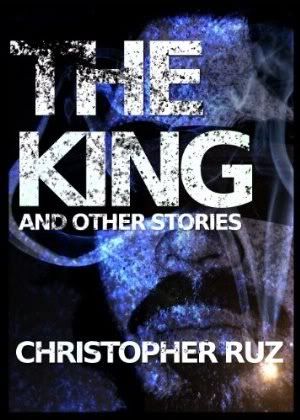
A friend that I work with has just released a book of short stories on Kindle.

I've had it in my head for so long that I'm not going to be a 'Worthwhile Writer (TM)' unless my work is picked up and recognised by a publishing house and, because of that, have sat there on my thumbs and done very little about it.
This is particularly daft because I have been picked up and e-published over in America several times and, for the last five years, have belittled that achievement because 1/ it was genre writing, and 2/ it was e-published.
Then there's this stigma about self-publishing that this exists even though it seems to become less relevant the more technologically savvy and e-book reader reliant we (even in Australia) become. However, that stigma seems to be mainly to do with the quality of editing that these self-published books have.
It was already so hard to get yourself picked up by a publishing house when I was in high school; it's about a hundred or so times more difficult these days. And then, even if/when you get picked up, there are the internal politics of most publishing houses that will put the books/authors that are more known against the unknown writer of dubious sales. I've even heard of someone's book being accepted and then never published, though the house ended up keeping the option for the rest of the two years of the contract.
Don't get me into the fact that, in this day and age, any aspiring writer -or any writer at all, really- needs to get hip deep into their own marketing/publicity side. Again, unless you are a well known author, the majority of publishing houses just aren't going to do that for you.
I look at all of this and I wonder what, really, is the good of waiting for a publishing house to sit up and discover me?
I have these amazing contacts and friends from my e-publishing times, and have since made many more.
I have a workshopping circle I meet with most Tuesdays, and several people who have either established proof reading business or upcoming ones. Hell, the number of people I've had offer just to read my creative thesis as experience for their proof reading business before the end of the year has astounded and flattered me.
I have this wonderful idea for a series of hand bound chapbooks that I've been sitting on for almost a year now (okay, there have been reasons, and perhaps even this close to the end of honours is not the best time for me to be picking this up again but, so, whatever..)
Not to mention the many friends that have come up to me over the years and said that, if I ever do get any of my work published, even self published, that they want to read it because I'm one of the few amateur writers whose work they already enjoy.
So, you know what? I have a goal ahead of me. And that goal is made up of a whole bunch of teeny tiny little steps that may, one day, lead up to that great big goal in the sky: Best New Writer.
Subscribe to:
Posts (Atom)